Rates are up again. Here's why the block you pick matters more than ever
G'day, Peter here. Last Tuesday the Reserve Bank lifted the cash rate by another quarter of a per cent, to 4.85 per cent - the highest since late 2008. It took effect on 4 November. Inflation is still running hot, and the Bank doesn't expect it to get back to the top of its 2 to 3 per cent target until late 2027. They'll look at it again on 8 December.
What that means if you're looking to build
If you're planning a new home, have a chat with your lender or broker about what you can comfortably borrow. Don't guess it. A higher cash rate usually works its way into loan repayments.
There's another cost sitting next to the rate. On 30 October the Australian Bureau of Statistics reported that house-building materials rose 1.0 per cent in the September quarter and 3.9 per cent over the year, the fastest annual rise since late 2023. Electrical gear was up 14.5 per cent for the year and plumbing products 9.4 per cent, largely on copper and plastic pipe. On the day of the rate rise, Master Builders Australia noted that material costs are at a three-year high, and put the cost of building a new home about 53 per cent higher than before the pandemic.
That doesn't mean everyone should stop. Dubbo Regional Council still received 25 major development applications in the week to 1 November, 20 of them for new houses or dual occupancies. It does mean your budget needs to be honest, and the block you buy shouldn't hide a pile of extra site costs.
Check the block before you buy it
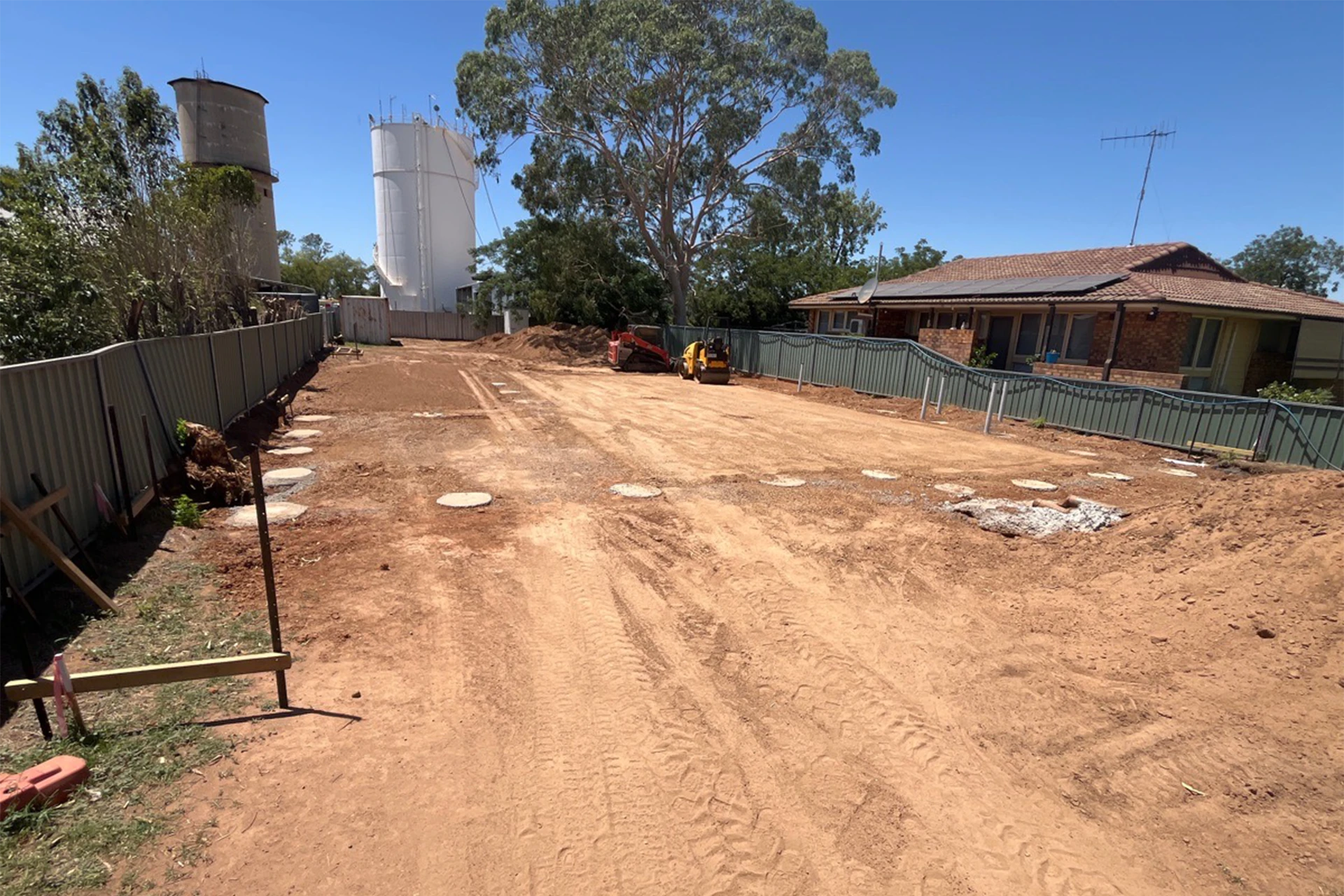
The price on the sign isn't the full cost of the block. Two lots in the same street around Dubbo, or further out toward Orange, Bathurst, Parkes, Mudgee, Wellington or Narromine, can cost very different amounts to build on.
Before you exchange contracts, check:
Services. Is town water, sewer, power and NBN at the boundary, or will you pay to bring them in? Out of town you may need tanks, a septic or treatment system, and extra power work.
Title and overlays. Ask about flood, bushfire and zoning, and look for easements or covenants that shift the house or limit what you can build.
The ground. Get a soil test. Soils around the Central West can be quite reactive, and some sites have rock or poor drainage. That changes the footings and the cost.
Slope and access. A fall across the block can mean extra earthworks, retaining walls and drainage. Make sure a concrete truck and a frame delivery can get in.
Which way it faces. Orientation and eaves make a real difference here to summer heat and cooling bills.
If you've got a design in mind - one of our existing plans, something like Bush Peach from the Natural Collection, or a custom layout — bring it along. Luke McConochie or I are happy to walk the block with you and talk through what it will actually take to build there, before you sign anything.
Have a chat
If you're looking at a block, or thinking about a new home, knockdown rebuild or dual occupancy in the Central West, give us a call. We'll give you a straight answer and help you plan the next step.
Cheers, Peter Parkes PV Homes
- Phone: 02 6841 5000
- Email: sales@pvhomesnsw.com.au
- Office: 11/11 Asset Way, Dubbo NSW 2830
General information only, not financial, legal or planning advice. Figures are from publicly available sources current as at 8 November 2026. Please check with your lender, solicitor and the relevant government agency before you make a decision.
Recent Post
-

Welcome to PV Homes
30 October 2026
